
Are You Developing Leaders, or Delivering Return on Instructions?
On the difference between building better managers and developing leaders

Consider an organisation that has taken development seriously.
The investment is significant and sustained. Strengths assessments have been completed across the leadership team. Coaching programmes are in place. CBT-based tools like Psychological Capital, the combination of optimism, efficacy, hope, and resilience, have been introduced and reinforced.
The results are visible. The leaders are sharper. They communicate more clearly, manage conflict with more composure, and deliver results with more consistency. They are, by most measures, better than they were.
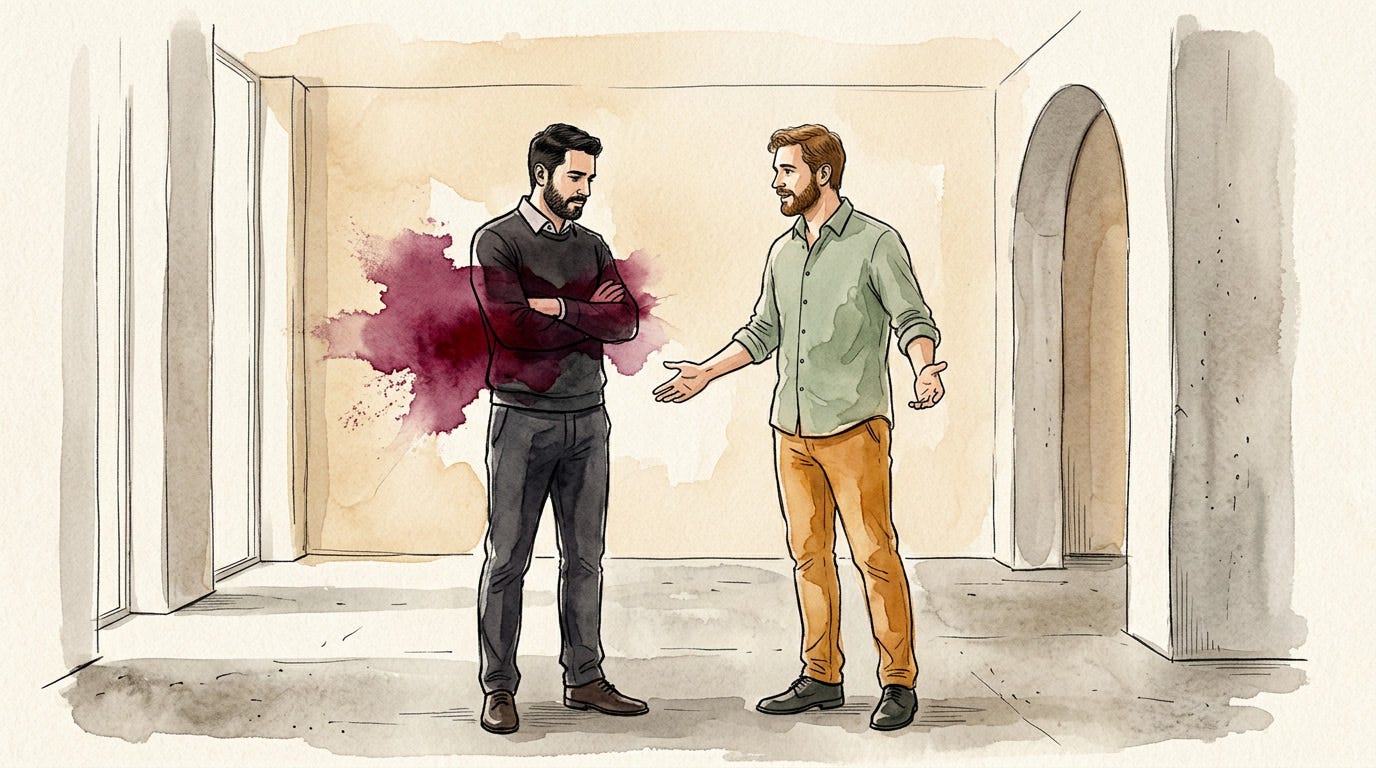
Then something shifts. A direct report stops performing and needs to be heard, but the leader gives them a plan. A team that used to follow starts asking to be involved in decisions, and the leader tightens the process. The board demands both exceptional customer service and lower operating costs, and the room needs someone who can hold that tension long enough for a new answer to emerge. The leader picks a side.
And the same leaders who organised so effectively discover they have no way of being in the room without having the answer.
The organisation is confused. It did the work. It invested in its people. The development was real.
What it built, though, was something specific. And the thing it built has a ceiling that most organisations never examine.
What capability actually builds
StrengthsFinder sharpens a person’s known qualities. Psychological Capital develops the internal resources that sustain performance over time, optimism, efficacy, hope, and resilience. These are valuable. They produce measurable improvement. They make people more effective, more consistent, and more able to perform within the frame they are operating in.
This is what management requires. Management, at its core, is the ability to organise and optimise. To take a given structure, understand its logic, and make it run well. To coordinate people, allocate resources, and solve problems within a defined space. The tools of capability building are designed for this work, and they do it well.
Most organisations need more of this, not less. The discipline of good management is undervalued, and the people who do it well carry more than they are given credit for.
There is also a quieter reason organisations gravitate toward capability programmes. They are measurable. A strengths profile produces a report. Psychological Capital produces a score. Progress can be tracked, benchmarked, and presented to the board. In a culture that demands return on investment, this matters.
But it is worth asking what the return actually measures. When a leader completes a capability programme and communicates more clearly, delivers more consistently, and aligns more readily with what the organisation expects, what has been developed is compliance with a set of mandated behaviours.
The leader has become better at doing what the structure asks of them. Return on Investment, in this context, is closer to Return on Instructions. The organisation gets back what it put in: more effective execution of the existing model.
Which is precisely what management is.
The question is what happens when the task becomes leadership.
What leadership asks instead
Leadership is enabling others. And enabling others requires humility. The willingness to stand in a room without being the person with the answer. To ask a question you do not already know the answer to. To sit with someone’s struggle without solving it, because the solving would serve your comfort more than their growth.
It requires curiosity. Genuine interest in what another person sees, thinks, and carries. The kind of curiosity that can only exist when you are not already certain.
These are incompatible with the ego story that management rewards. The manager finds safety in expertise, in decisiveness, in being the one the room turns to. This is reasonable. The structure reinforces it. Organisations promote people who know things, who act quickly, who reduce ambiguity. The ego story that forms around these qualities is not a flaw. It is an adaptation to what was asked.
Leadership asks something different. Enabling others means making room for them, and making room for them means taking up less of it yourself. The leader has to find safety in something other than being the most capable person in the conversation. That is an identity shift, not a skill addition.
This is where capability building reaches its limit. No strengths assessment, no measure of Psychological Capital can rewrite the story underneath, the one that says your value depends on being the person who knows. That work is interior. It means turning inward, examining the ego stories that made you successful as a manager, and loosening their grip enough to let a different kind of presence emerge. A presence that is less about holding the answers and more about holding the space in which others can find their own.
The gap most organisations cannot see
Capability builds the manager. Capacity rewrites the story underneath.
The first strengthens the grip. Sharper expertise, more resilience, better optimisation. The leader becomes more effective inside the given structure. The second loosens it. Wider holding, more room for others, less need to be the one with the answers. The leader becomes able to function when the structure shifts, or when there is no structure at all.
Management and leadership are not mutually exclusive. A leader who has developed capacity can still organise and optimise when the situation calls for it. Sometimes the room needs structure, clarity, a decision made quickly. The difference is that it becomes a conscious choice, a mode the leader steps into rather than the only mode available to them.
The danger is when a leader carries only a management mindset and has never done the interior work. They will default to being the one with the answers. When the situation asks for enabling, they reach for control. Micro-management. Directive authority. The familiar safety of expertise applied to a moment that needs something else entirely. There is no faster way to kill the engagement of a team than to lead with the need to be right.
Most development investment strengthens the manager’s ego story and calls it leadership development. The gap between those two words is where organisations are most exposed, and it only becomes visible when the ground moves.
One of the most difficult dynamics I see in organisations is what happens when these two mindsets meet in a reporting line. A leader who has developed capacity, who leads with humility and curiosity, reporting into someone who carries only a management mindset. The leader makes room for their team. Their manager reads that room as a lack of control. The leader asks questions. Their manager wants answers. The leader holds complexity. Their manager wants it reduced. The working relationship becomes a daily friction between two fundamentally different orientations to the same work, and neither person may fully understand why.
What it would mean to develop leaders in the territory where they have to let go of the very thing that made them successful is a question most organisations have never seriously asked. It may be the one that determines whether they have managers or leaders when it matters most.
Reflective Question: Where in your own leadership does your strongest capability quietly prevent you from enabling someone else?
This essay is part of Series IV: The Organisational Implications, on what happens at the collective level when leadership development moves beyond the individual. Other essays in this series explore what organisations are really developing when they develop leaders, and what the inner architecture of a leader means for the teams around them. See the full series here.